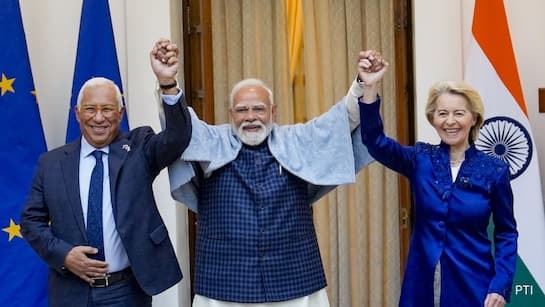
The "Mother of All Deals": India and the EU Reshape Global Trade
While the world was watching the final tariff-free milestones between India and Australia on January 1, 2026, a much larger economic earthquake hit the headlines just weeks later. Dubbed by Prime Minister Narendra Modi and European Commission President Ursula von der Leyen as the "Mother of All Deals," the India-EU Free Trade Agreement (FTA) has officially reached a historic conclusion.
Here is why this deal is being hailed as the most consequential trade pact in modern history.
1. The Scale: Two Giants, One Market
The "Mother of All Deals" creates a massive free trade zone covering nearly 2 billion people.
Global Weight: The agreement represents approximately 25% of global GDP and nearly one-third of all global trade.
Market Access: It opens the 27-nation EU bloc—India’s largest trading partner—to Indian exporters with unprecedented ease.
Immediate Impact: On day one of implementation, tariffs on roughly $33 billion of Indian exports are expected to drop to zero.
2. Sector Spotlights: Who Wins?
This deal isn't just about big numbers; it’s about transforming specific industries on both sides.
For India: Labor-intensive sectors such as textiles, leather, gems & jewellery, and marine products will receive a massive boost through zero-duty access to Europe.
For the EU: European manufacturers gain better access to India’s booming middle class, particularly for luxury cars (priced above ₹25 lakh) and premium wines and spirits, which will see phased tariff reductions.
Talent Mobility: A landmark "mobility pact" ensures smoother visas for Indian skilled professionals, including IT experts, engineers, and healthcare workers.
3. The "Strategic Shield"
The timing of this deal is no accident. Both India and the EU are navigating a "volatile global order".
Geopolitical Hedge: The pact serves as a strategic shield against trade disruptions from the US and China, reinforcing a rules-based global order.
Supply Chain Resilience: By deepening ties, both regions are diversifying their supply chains, particularly in critical technologies and clean energy.
4. The Road to Implementation
While the negotiations have concluded after 18 years, the work is just beginning.
Timeline: The deal is currently undergoing "fast-track legal scrubbing" and is expected to come into force within calendar year 2026.
Broader Agenda: Alongside the FTA, India and the EU have unveiled a Defence Framework Pact and a strategic roadmap for 2030, signaling that this relationship is now about far more than just commerce.